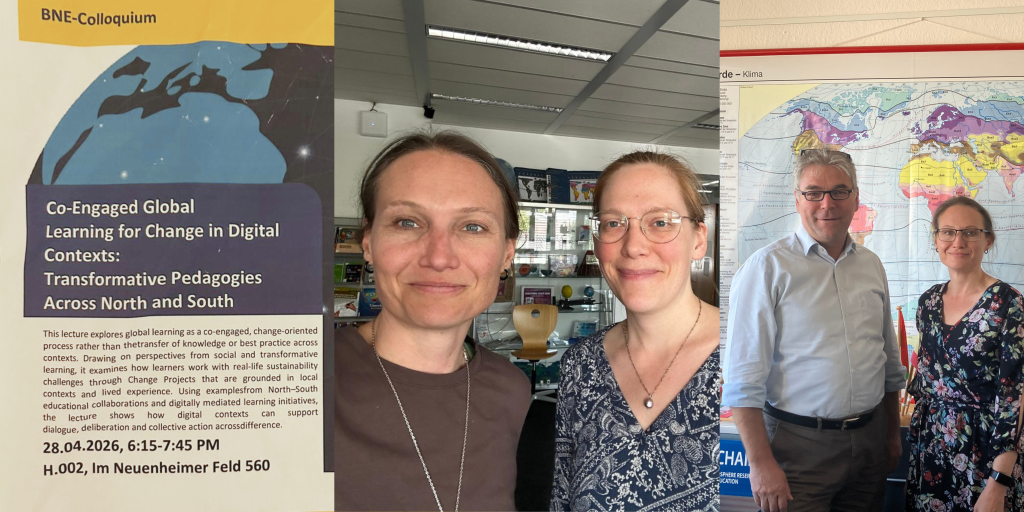
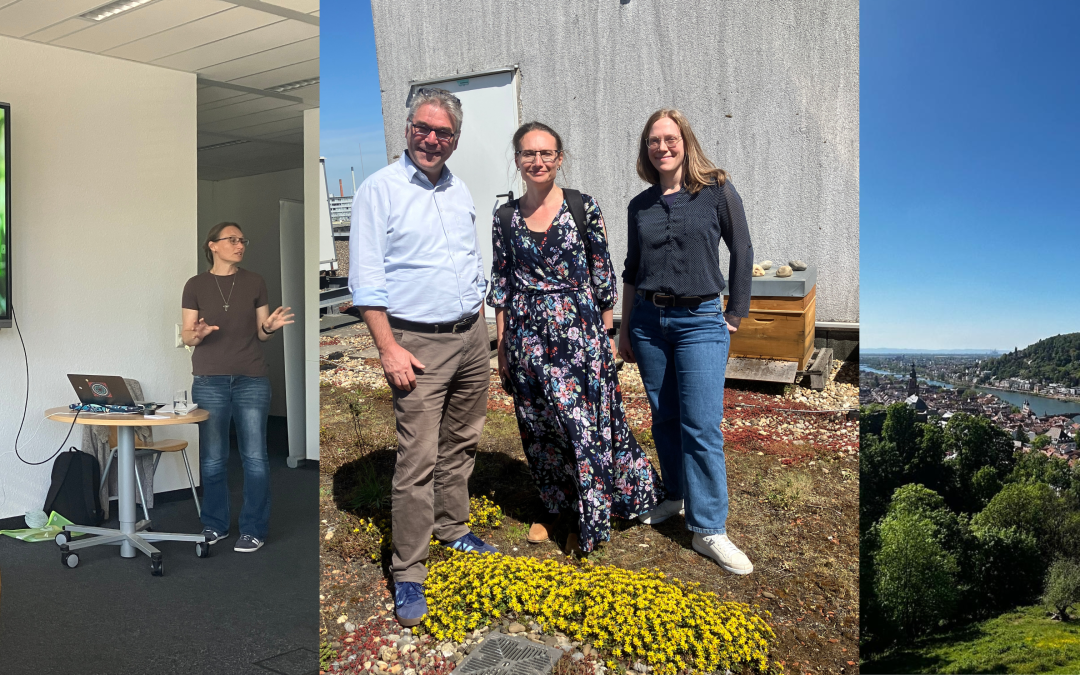
The Department of Adult and Community Education (DACE) at Maynooth University recently had the valuable opportunity to visit and engage with colleagues at Heidelberg University of Education in Germany through a week of teaching, research exchange, and collaborative discussion.
The visit took place from 27 April to 1 May 2026 and was undertaken by Dr Wilma van Staden as part of DACE’s ongoing work in Education for Sustainable Development, digital learning, teacher education, and international collaboration. The visit created an important opportunity to share current work from Maynooth University and to explore future collaboration between DACE and Heidelberg University of Education.
The visit was hosted in connection with the UNESCO Chair on Earth Observation and Geocommunication, led by Prof. Dr. Alexander Siegmund, and included engagement with colleagues from the Institute of Geography and Geocommunication and the Heidelberg Center for Education for Sustainable Development. Sincere thanks are extended to Prof. Dr. Alexander Siegmund, Teresa Ruckelshauß, Dr. Carsten Müller, Tobias Klös, Prof. Dr. Jochen Laub, and the wider Heidelberg team for their generous welcome, thoughtful facilitation, and rich academic exchange throughout the week.
Across the week, discussions focused on how education can respond to complex sustainability challenges through more participatory, digital, practice-based, and change-oriented forms of learning. These themes strongly connect with DACE’s work in adult and community education, particularly its commitment to socially engaged learning, transformative education, community-based practice, and education for more just and sustainable futures.
As part of the visit, Dr Wilma van Staden contributed to three teaching and research engagements. The first was an ESD Colloquium presentation titled “Co-Engaged Global Learning for Change in Digital Contexts: Transformative Pedagogies Across North and South.” This presentation explored how digital learning environments can support Education for Sustainable Development when they are intentionally designed as spaces for participation, dialogue, reflection, and action. It highlighted the importance of transformative and transgressive pedagogies, particularly in contexts where education is required to respond to social-ecological challenges, inequality, and the need for more sustainable futures
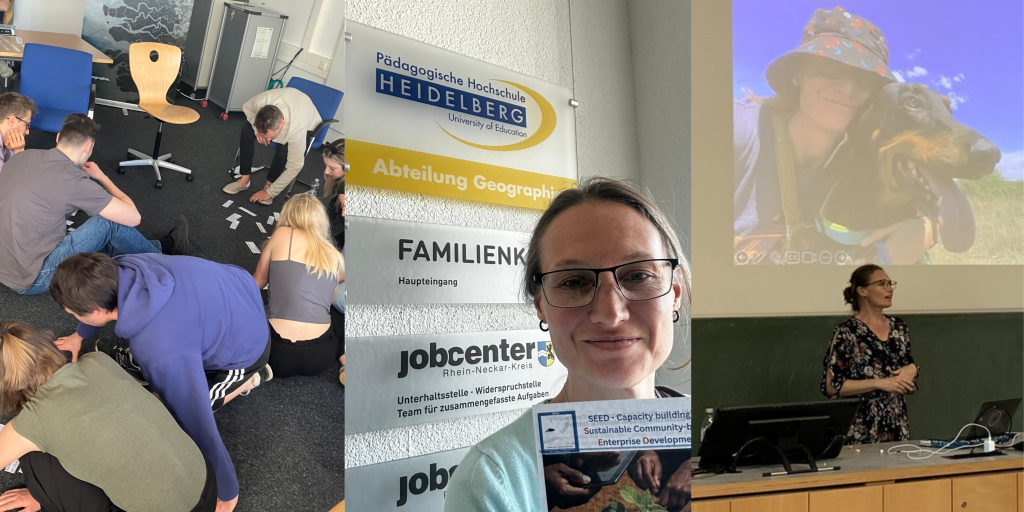
The second engagement was a workshop titled “From Start-Up Stories to Handprint Action: A Digital ESD Change Project Workshop.” This session focused on how digital tools, storytelling, and student-led change projects can support sustainability learning and action. Participants explored how local examples, narrative approaches, and digitally supported learning activities can help move learning beyond awareness towards practical Handprint action, while also supporting collaboration and reflection within educational settings.
The third presentation, “Living Microbial Landscapes – a Case Example,” opened a connected conversation about sustainability, heritage knowledge, food practices, and social-ecological relations. Drawing on fermented foods and microbial life, the presentation explored how everyday practices can reveal deeper relationships between culture, ecology, health, and learning. This provided a useful entry point for thinking about sustainability education as something that is not only taught through formal concepts, but also enacted through lived practices, local knowledge, and embodied relationships with the more-than-human world.
A connecting thread across the visit was the SEED project: Capacity-Building for Sustainable Community-Based Enterprise Development. SEED provided a concrete example of how digital learning, Education for Sustainable Development, and higher-education capacity-building can be brought together in practice. Its focus on micro-credentials, community-based enterprise, climate change education, social cohesion, and inclusive learning closely aligns with the pedagogical themes explored during the Heidelberg visit. In particular, SEED reflects the shift from knowledge transmission towards locally grounded, change-oriented learning that supports communities, institutions, and learners to respond to sustainability challenges in practical and meaningful ways.
The visit also opened valuable possibilities for future collaboration between Maynooth University’s Department of Adult and Community Education and Heidelberg University of Education. Shared areas of interest included teacher education, digital ESD, geography education, climate change learning, micro-credentials, community-based enterprise, and the use of digital tools to support social-ecological transformation.
Overall, the visit provided a valuable opportunity to share ongoing work from DACE, Maynooth University, and the SEED project, while also learning from the rich expertise and initiatives at Heidelberg University of Education. It highlighted the importance of international collaboration in developing educational responses that are locally grounded, digitally supported, and oriented towards more sustainable and socially just futures.